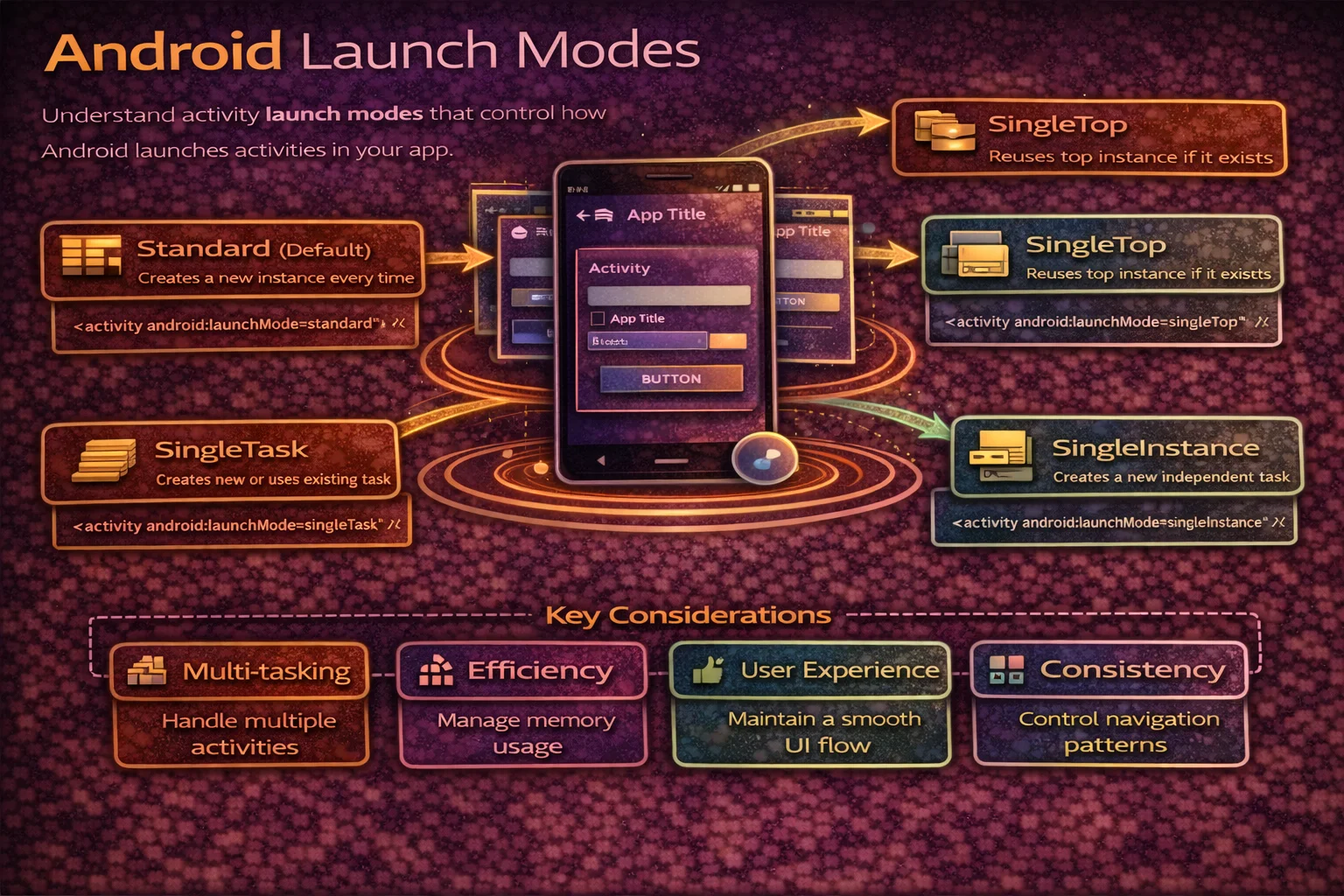
Launch modes control how Activities are created and placed in the back stack. This guide covers all five launch modes with visual back stack diagrams,...
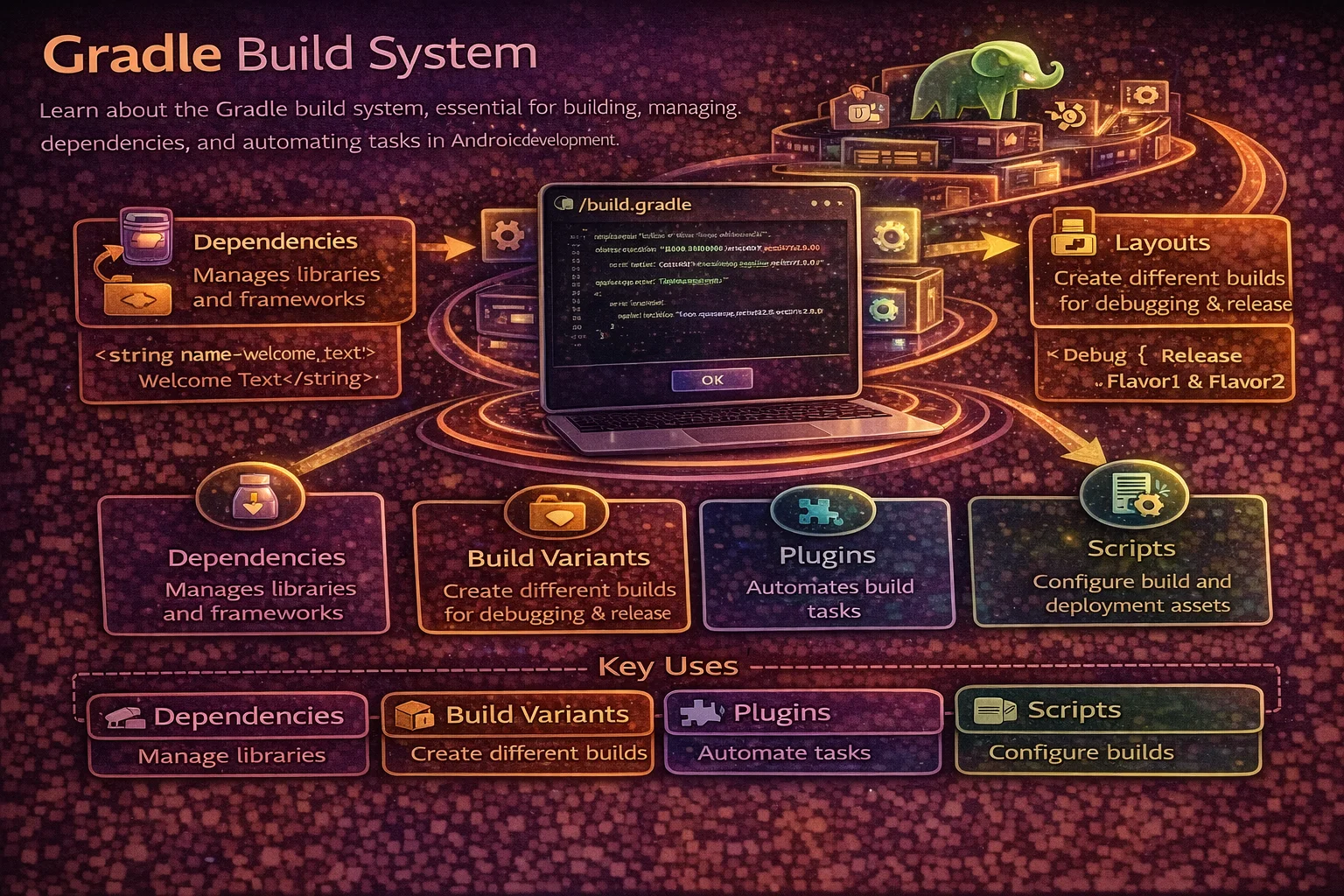
Gradle turns your Kotlin code into an installable APK. This guide covers the complete project structure, settings.gradle.kts, version catalogs (libs.v...
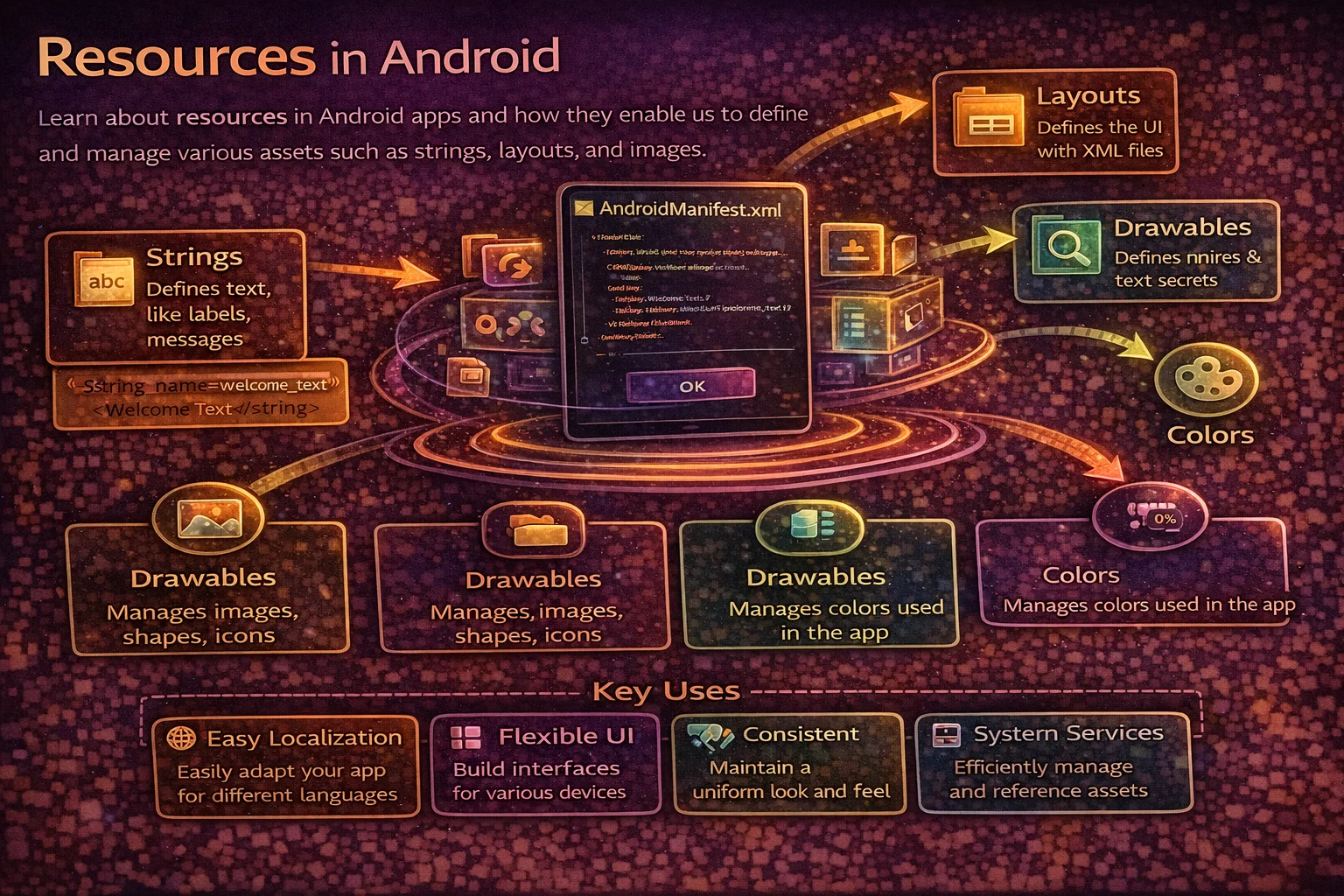
Android's resource system makes your app work across thousands of devices — different sizes, languages, densities, and themes. This guide covers...
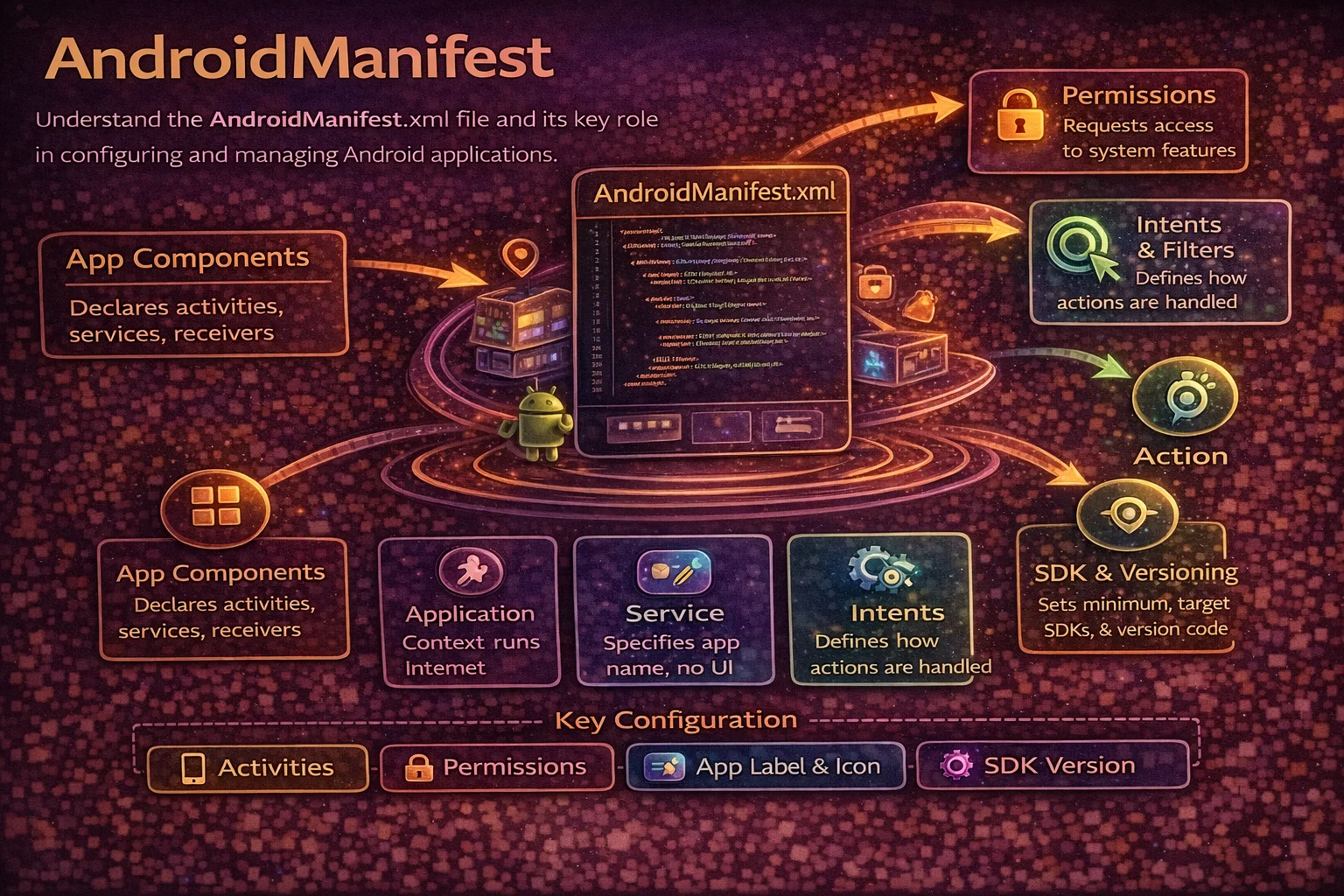
The manifest is your app's declaration file — read by the system before any code runs. This guide covers the complete manifest structure, permis...
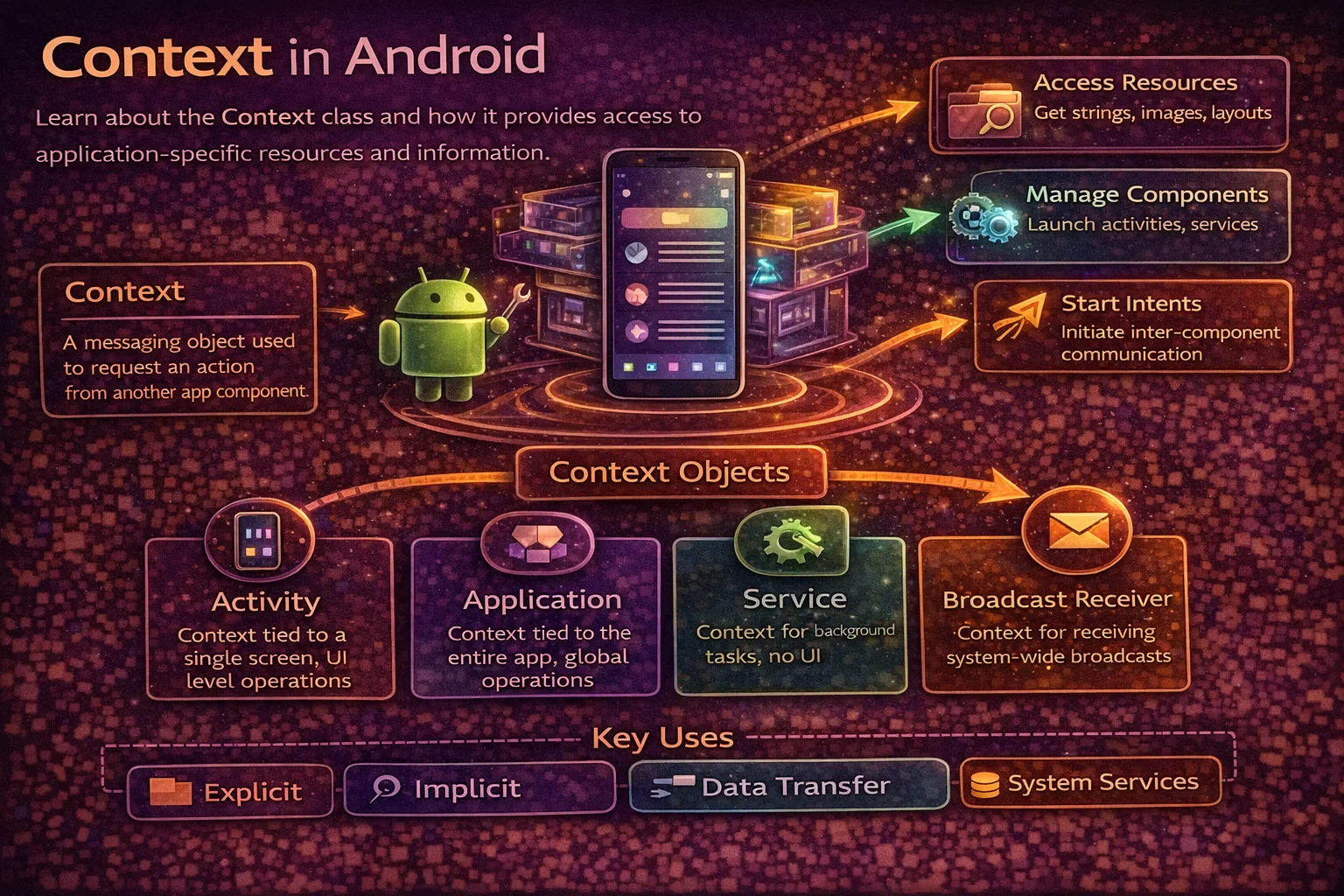
Context is the most used and most misunderstood class in Android. Using the wrong one causes memory leaks, theme bugs, and crashes. This guide covers ...
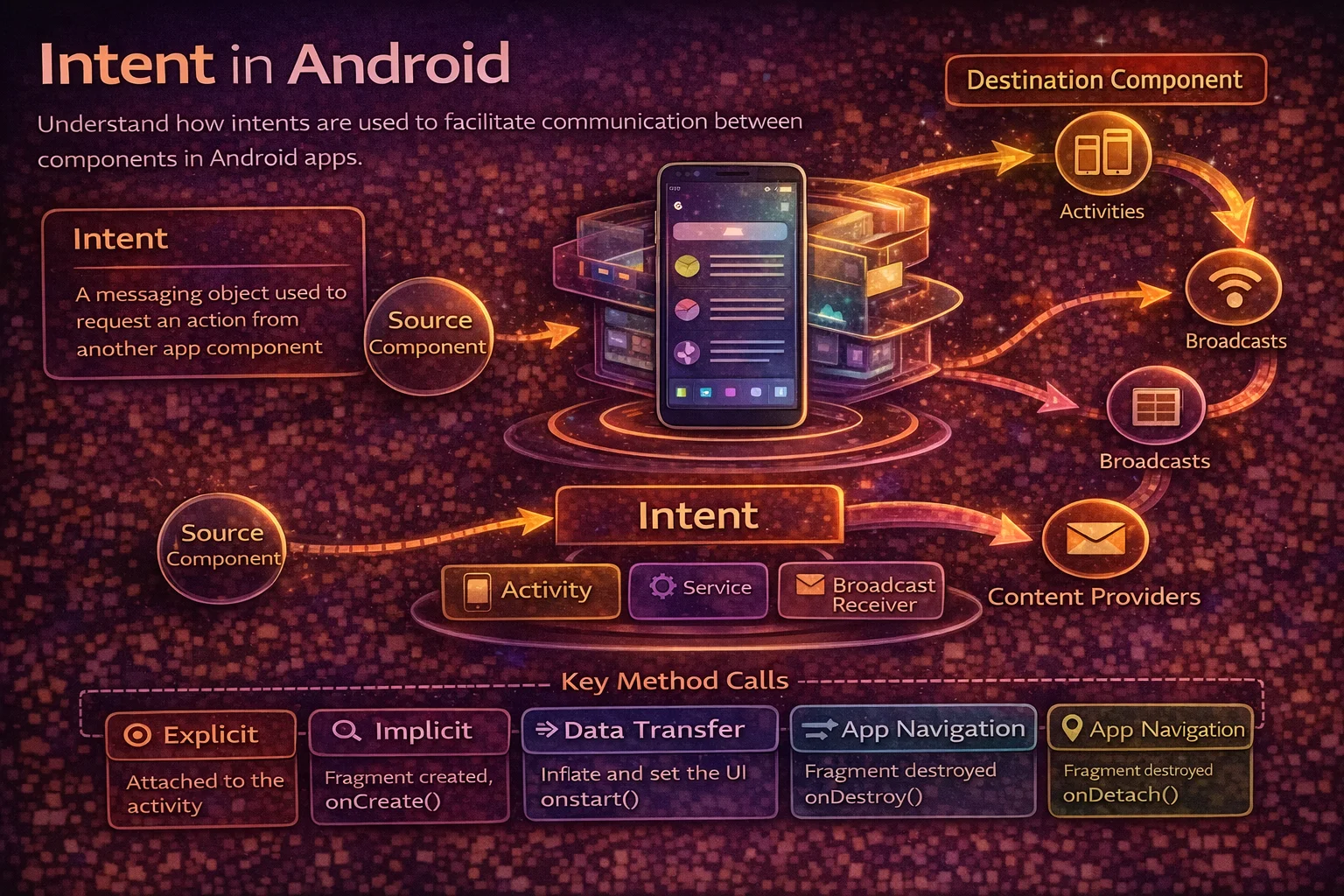
Intents are Android's messaging system — connecting Activities, Services, and apps. This guide covers explicit vs implicit Intents, passing data...
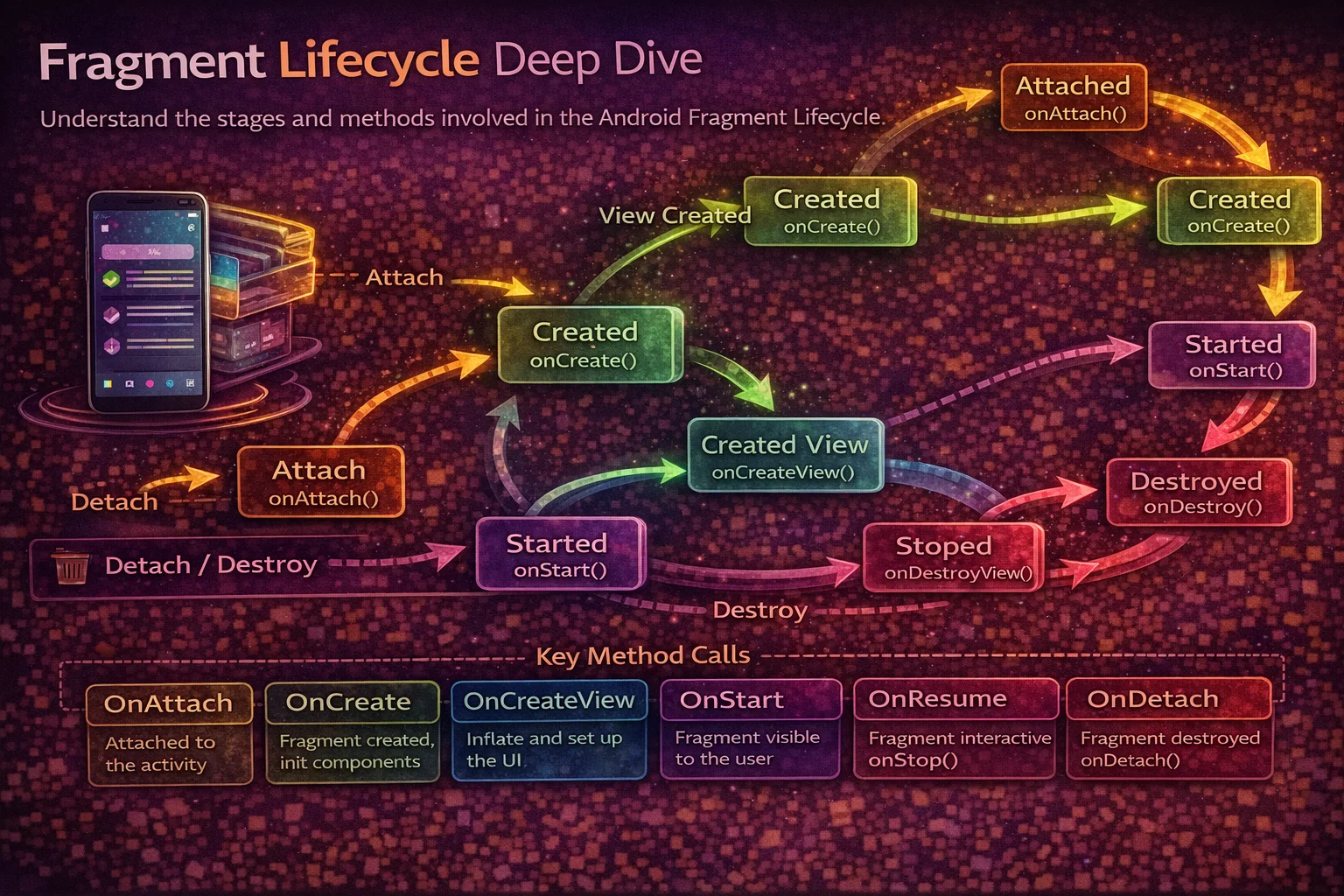
Fragments have two lifecycles — the Fragment itself and its View — and confusing them causes memory leaks, crashes, and duplicate observat...
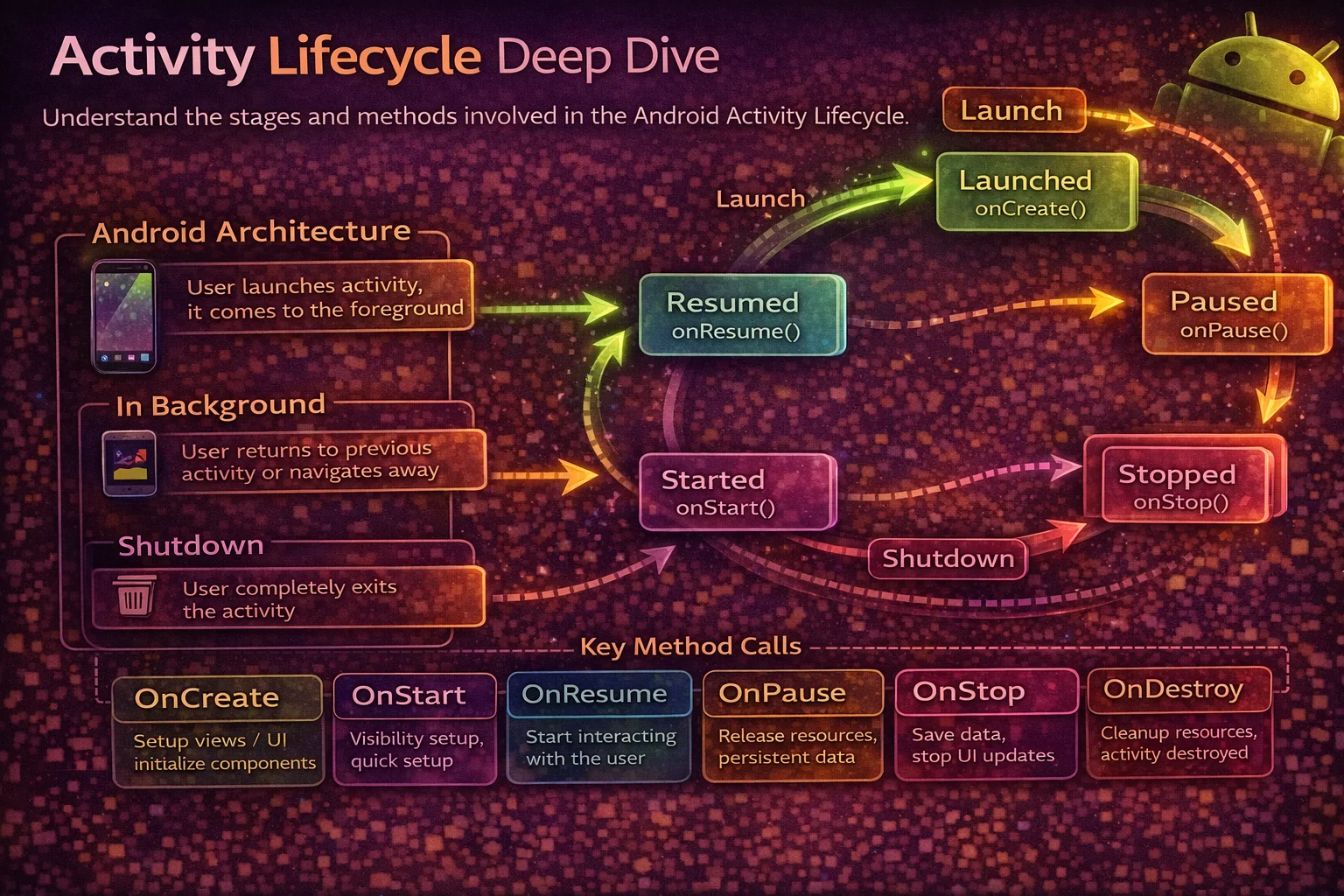
The Activity lifecycle is the most important concept in Android development. This guide covers every callback (onCreate through onDestroy), exact call...

Before diving into Activities and Jetpack, understand how Android actually works under the hood. This guide covers the system architecture layers, wha...