Android 17 Is Here — Compose-First, Adaptive-First, AppFunctions, and What Breaks at SDK 37
Android 17 (Cinnamon Bun, API 37) landed June 16, 2026 — and it's the most opinionated release in years. Google isn't just shipping features; it's lay...
Android · Kotlin · Compose · Architecture
In-depth tutorials, deep dives, and field notes on shipping production Android apps — from a 14+ year engineering veteran.
Android 17 (Cinnamon Bun, API 37) landed June 16, 2026 — and it's the most opinionated release in years. Google isn't just shipping features; it's lay...
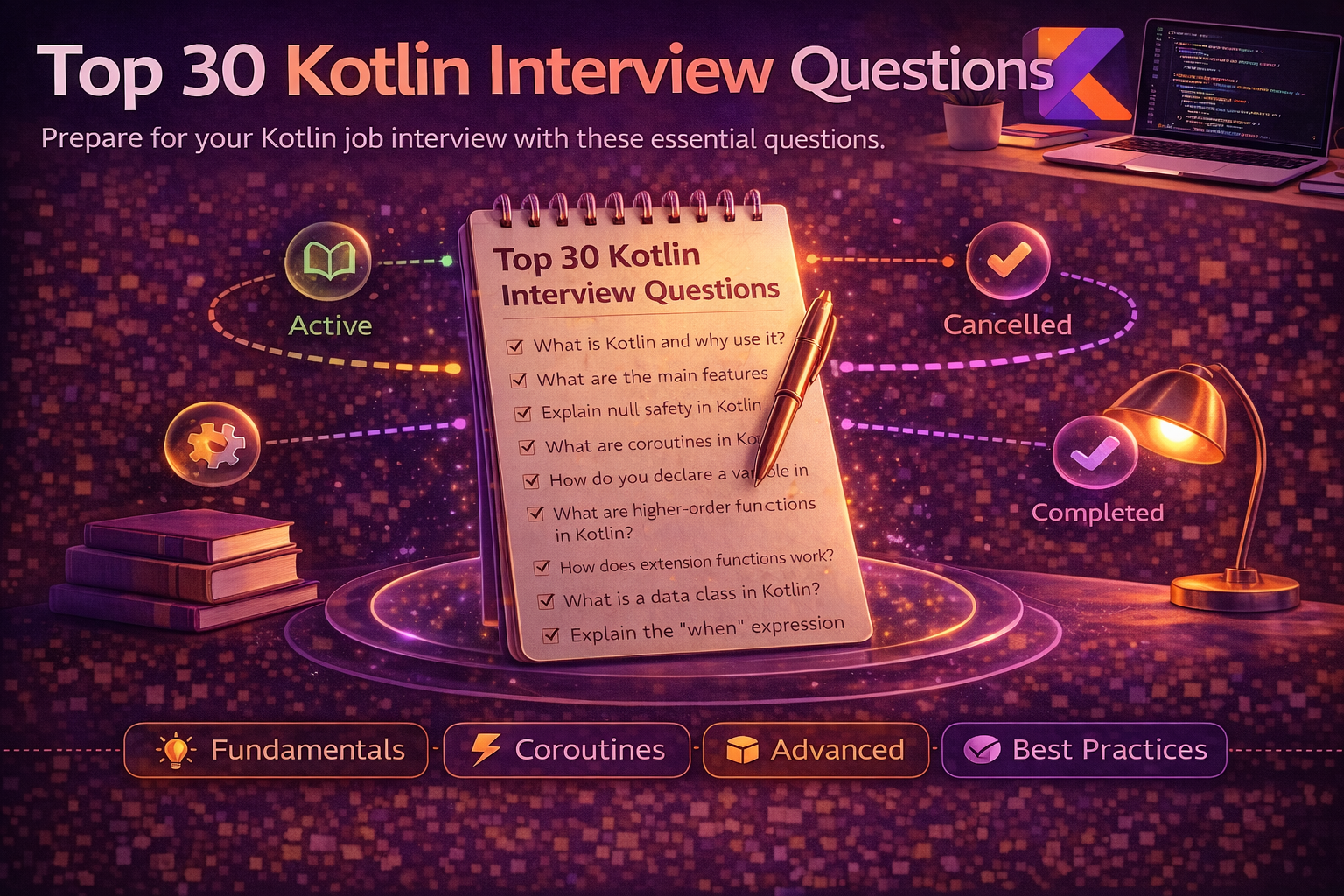
The 30 most commonly asked Kotlin interview questions with clear answers and code examples. Covers basics (val/var, null safety, string interpolation)...
Android 16 (API level 36) is less about new UI features and more about making app behavior predictable and reliable. It introduces refinements in navi...
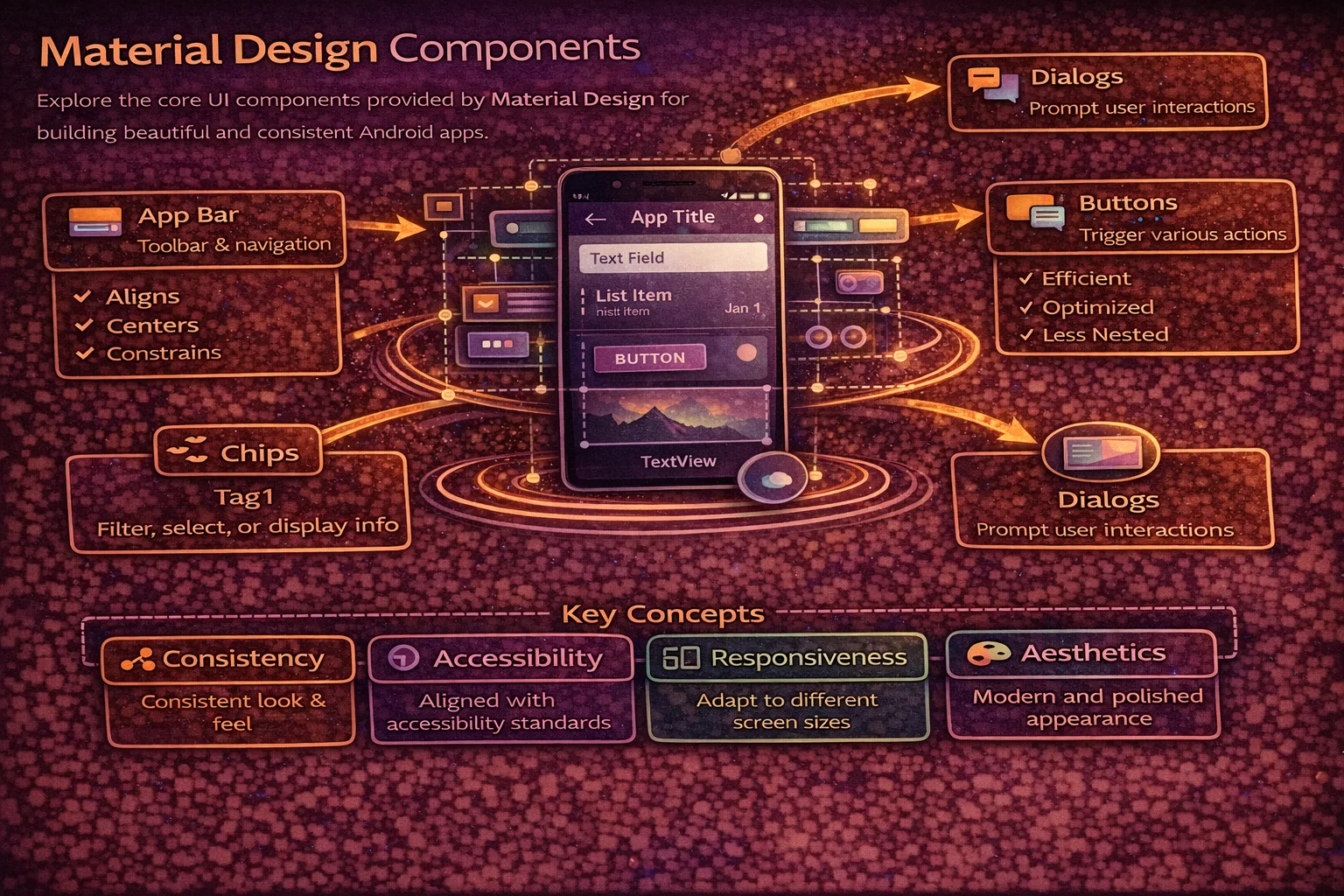
Material Components give you production-quality, themed widgets out of the box. This guide covers setup with Material3 theme, TopAppBar with collapsin...
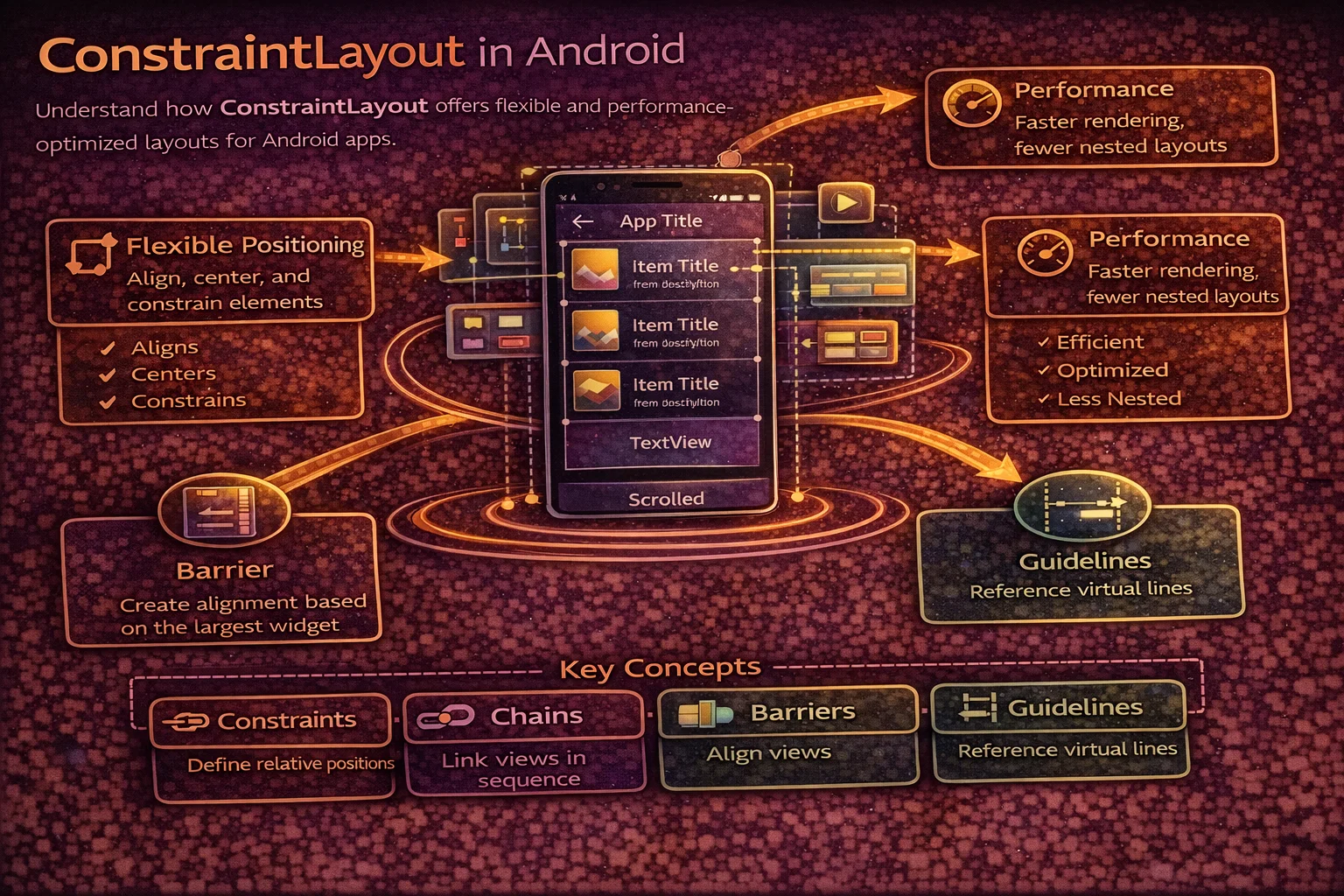
ConstraintLayout is the most powerful and recommended layout in Android — flat hierarchy, single measure pass, no nesting needed. This guide covers ba...
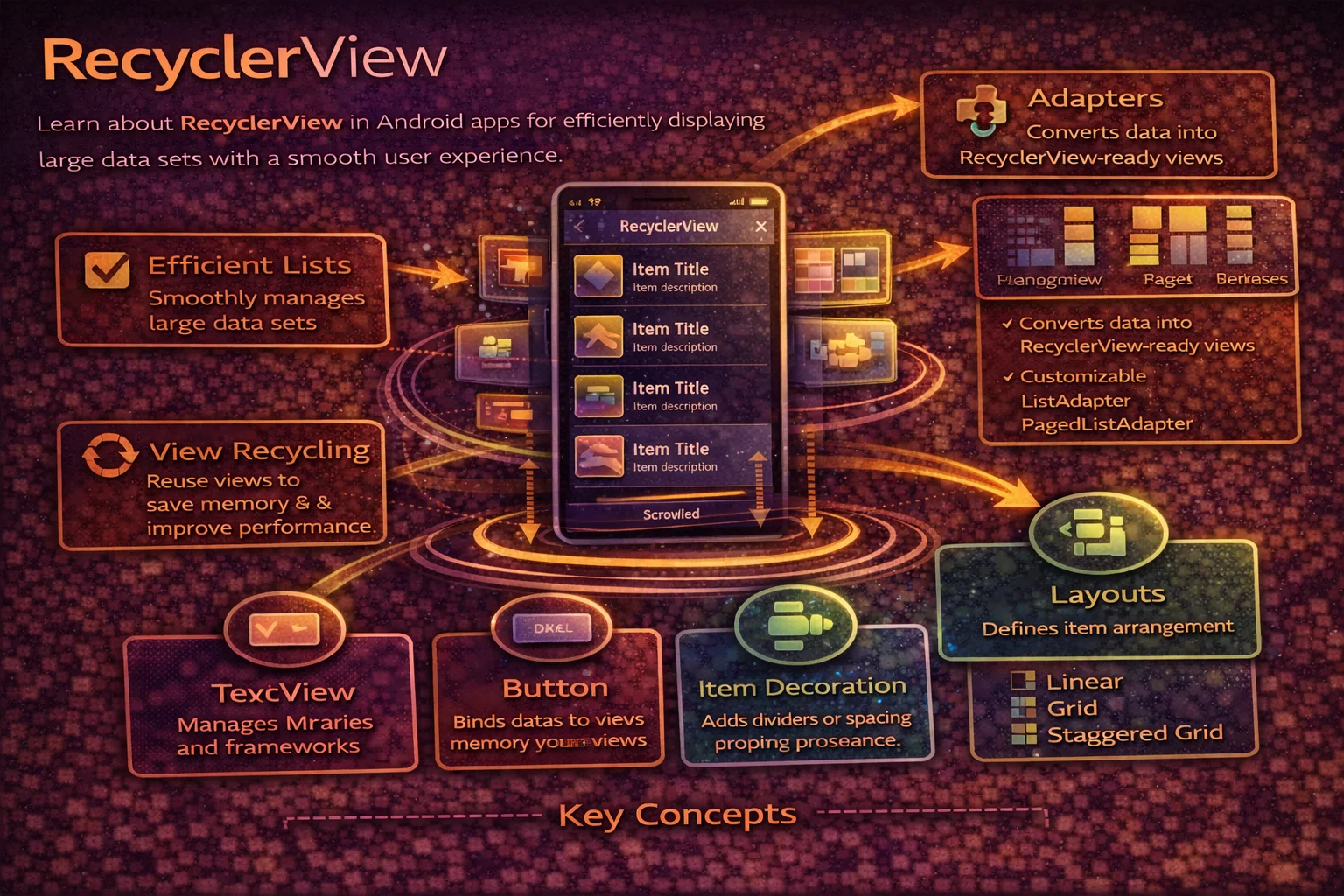
RecyclerView is the most important UI component in Android. This guide covers why recycling matters, complete setup with ListAdapter and DiffUtil, Vie...
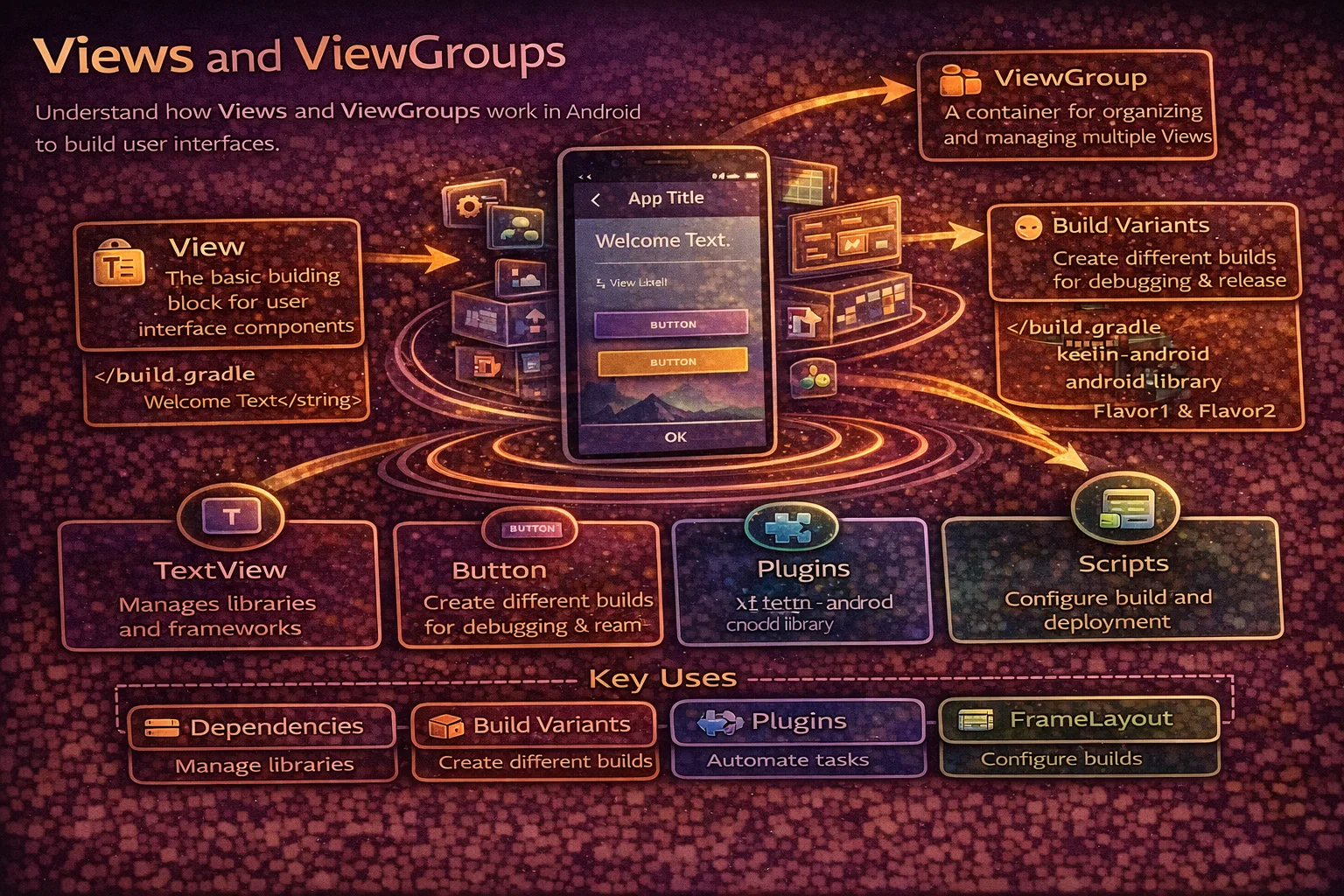
Every pixel on an Android screen is drawn by a View, and every View lives inside a ViewGroup. This guide covers the View hierarchy, essential Views (T...
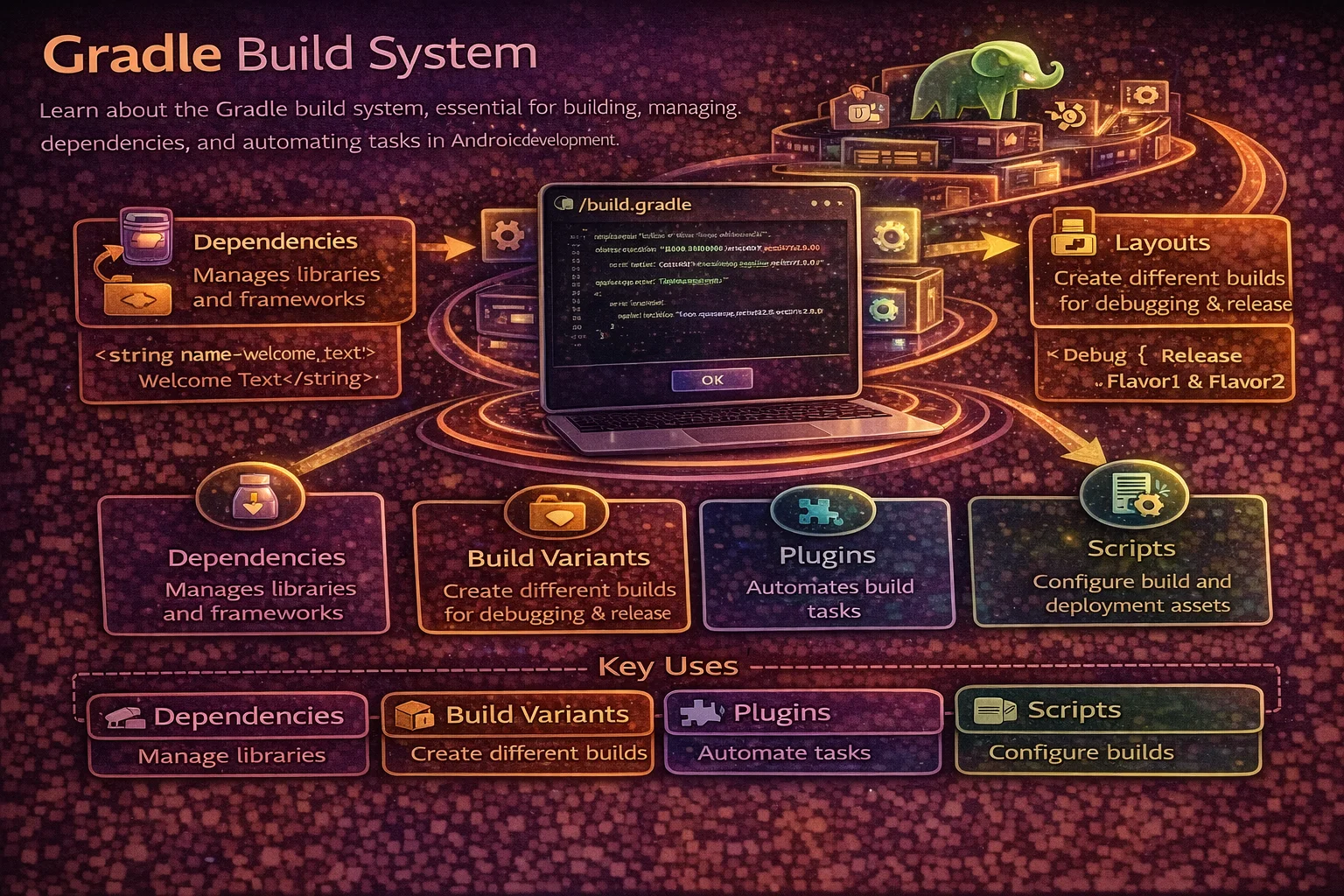
Gradle turns your Kotlin code into an installable APK. This guide covers the complete project structure, settings.gradle.kts, version catalogs (libs.v...
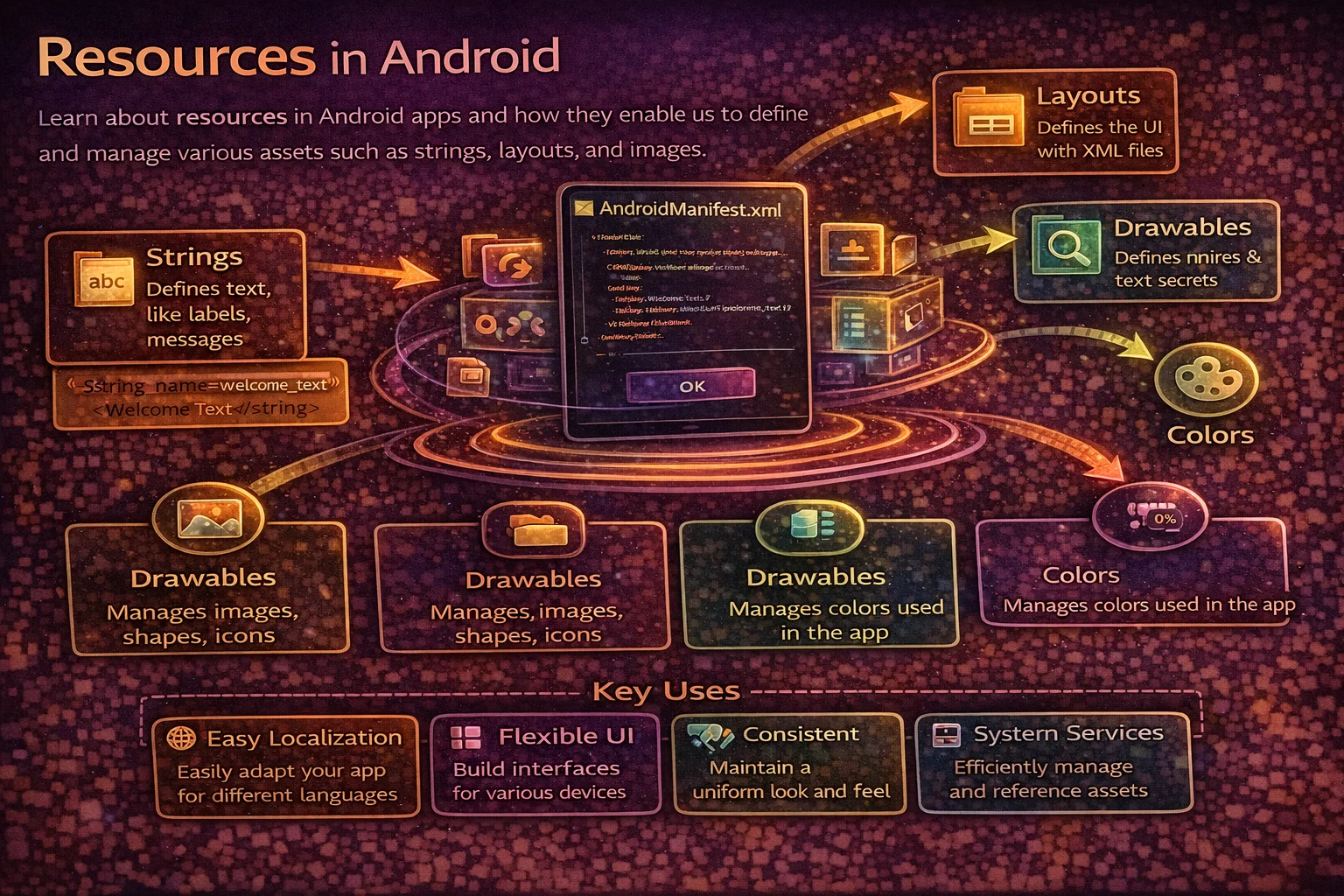
Android's resource system makes your app work across thousands of devices — different sizes, languages, densities, and themes. This guide covers the e...
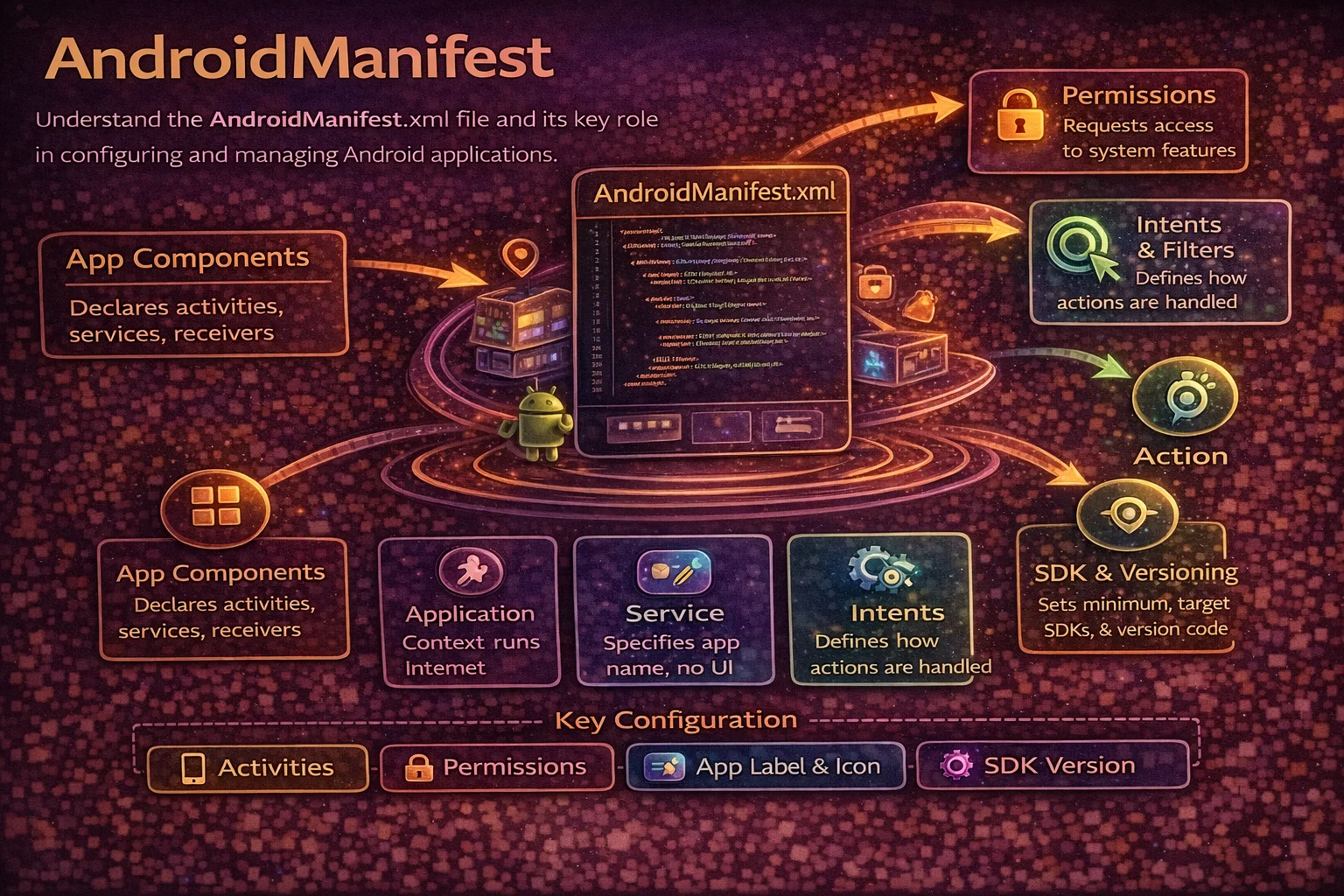
The manifest is your app's declaration file — read by the system before any code runs. This guide covers the complete manifest structure, permissions ...
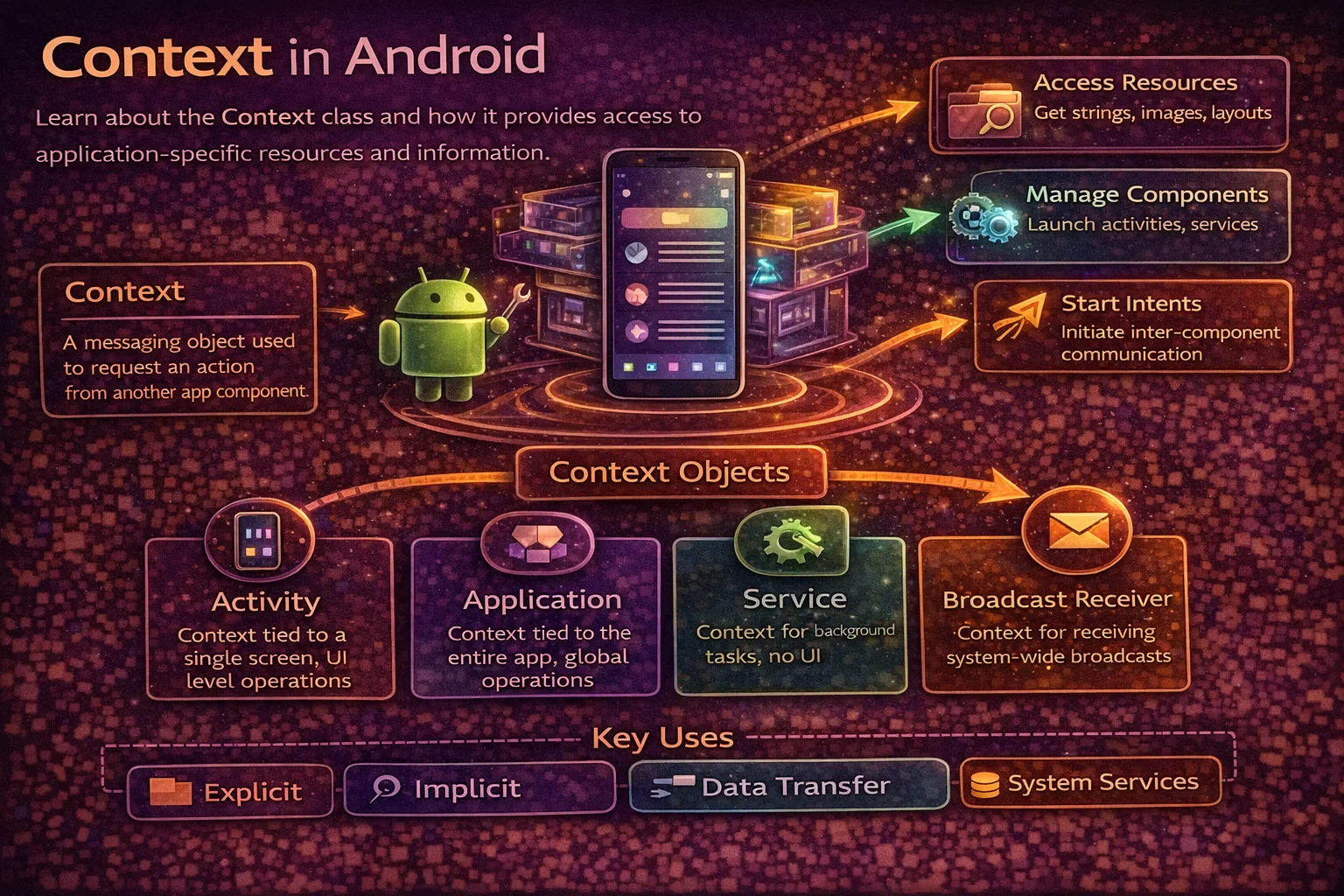
Context is the most used and most misunderstood class in Android. Using the wrong one causes memory leaks, theme bugs, and crashes. This guide covers ...
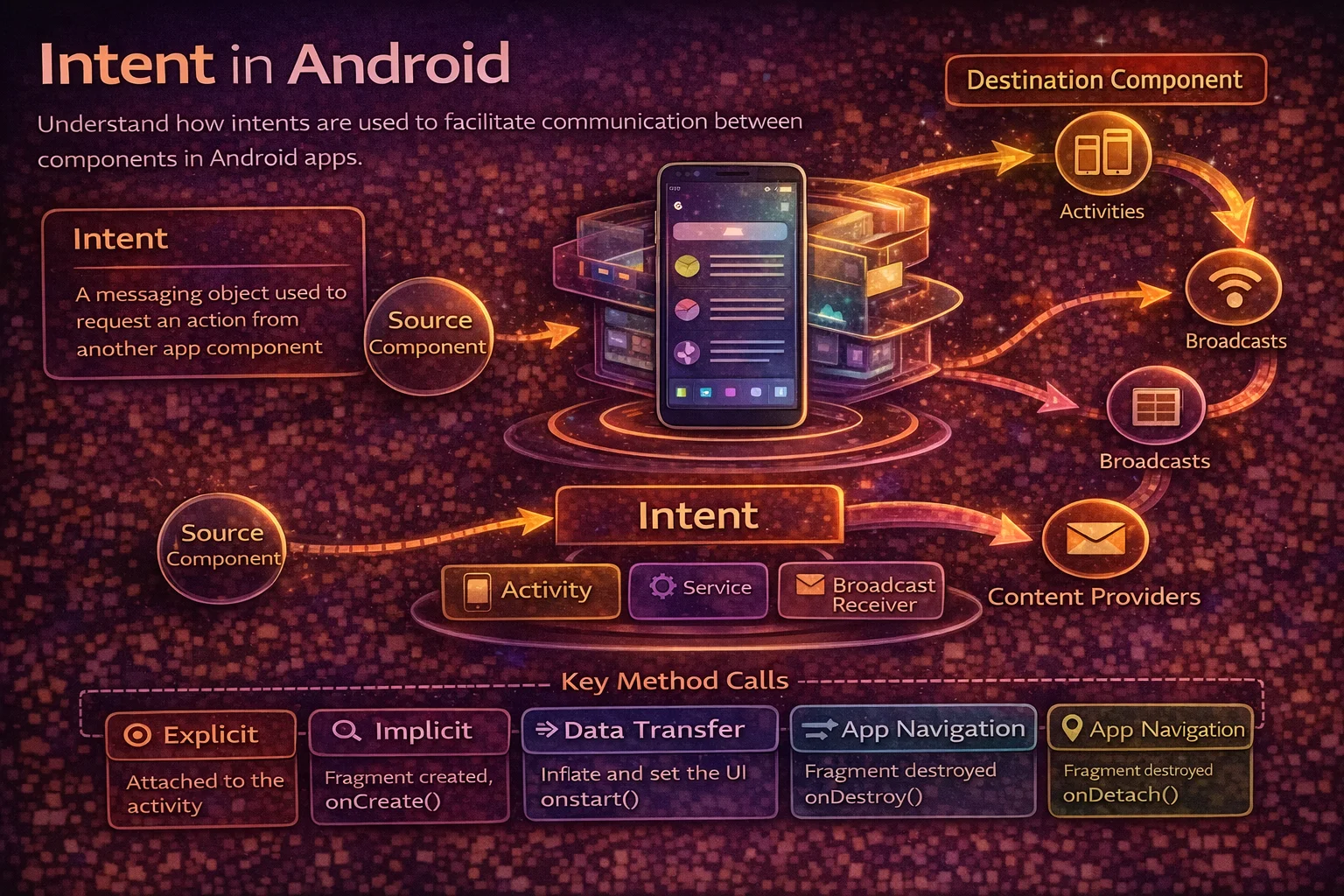
Intents are Android's messaging system — connecting Activities, Services, and apps. This guide covers explicit vs implicit Intents, passing data with ...
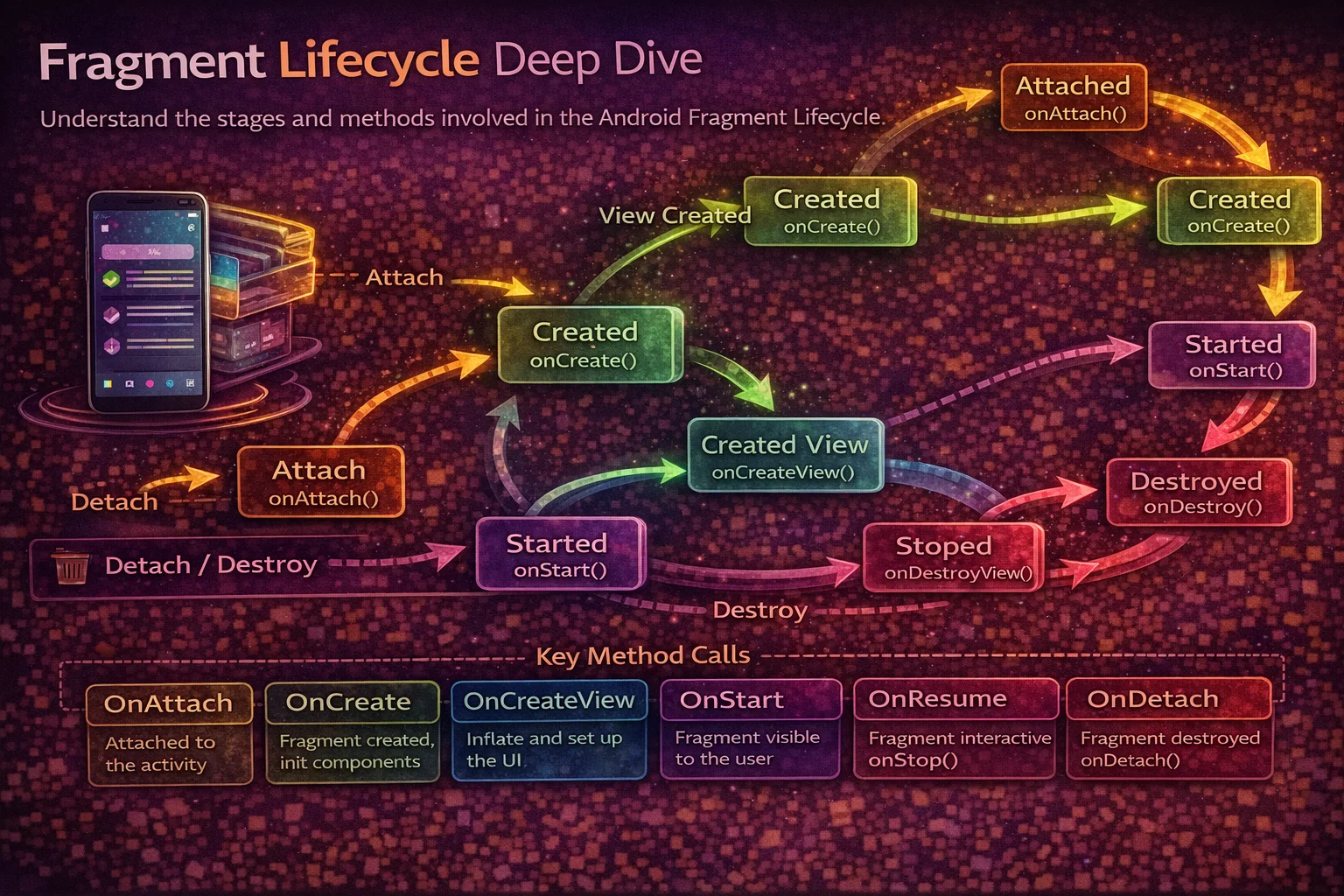
Fragments have two lifecycles — the Fragment itself and its View — and confusing them causes memory leaks, crashes, and duplicate observations. This g...
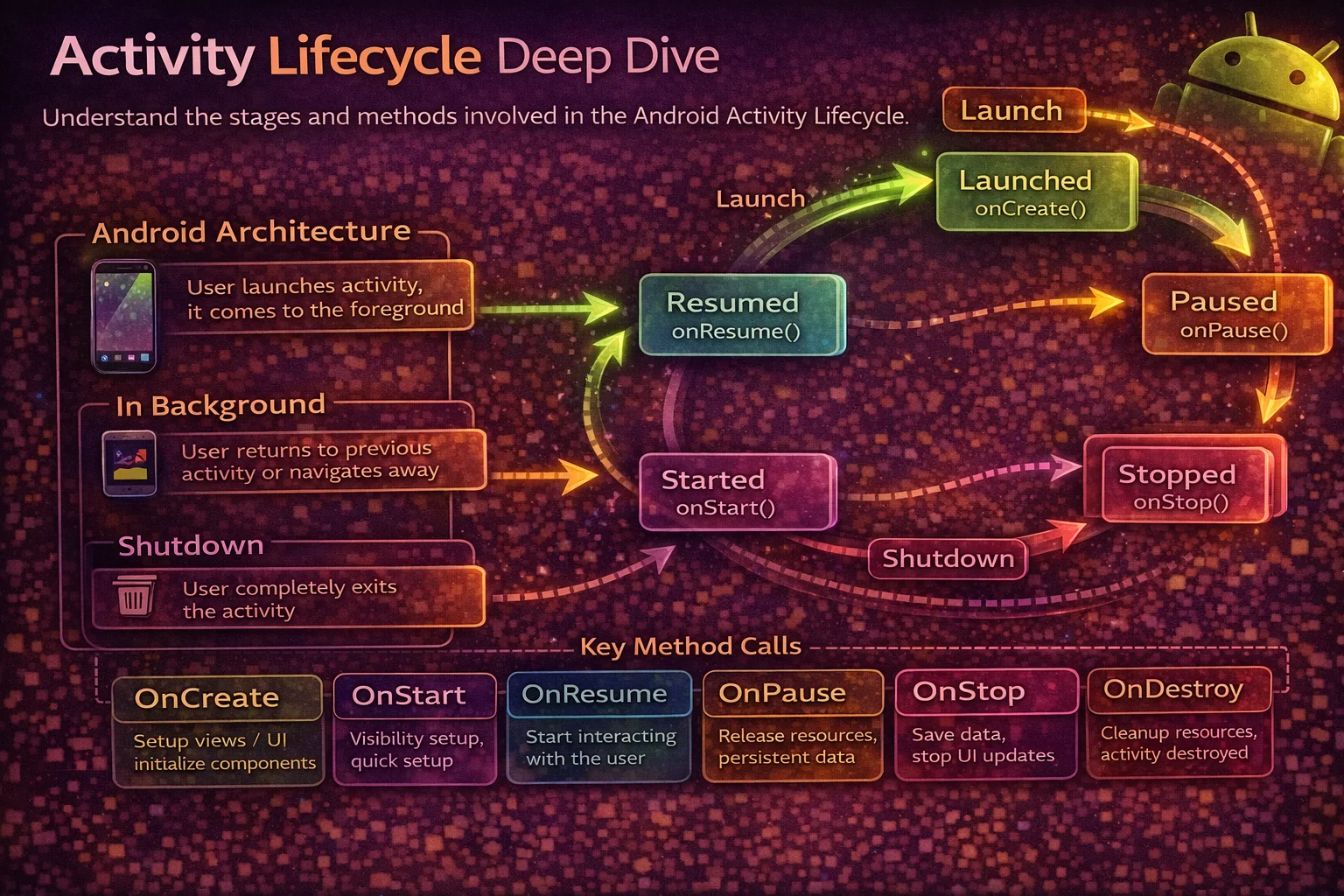
The Activity lifecycle is the most important concept in Android development. This guide covers every callback (onCreate through onDestroy), exact call...
Before diving into Activities and Jetpack, understand how Android actually works under the hood. This guide covers the system architecture layers, wha...